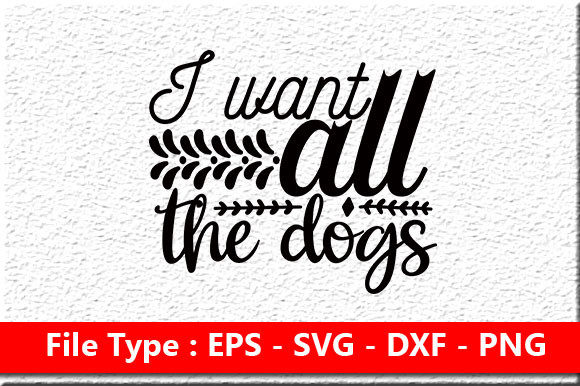
Dog SVG Design: I Want All the Dogs
As a designer who’s stitched thousands of custom pieces—from boutique baby onesies to Etsy best-selling tote bags—I opened Dog Svg Design, I Want All the Dogs expecting charm. What I found was something more useful: a cheerful, scalable graphic that leans into joyful simplicity without sacrificing embroidery viability. It’s not overly detailed, but it’s not generic either—there’s warmth in the rounded ears, playfulness in the slightly tilted head, and just enough contour to read clearly at 3–4 inches wide.
A Real-World Test: Embroidering This on a Linen Kitchen Towel
Last week, I prepped a small-batch holiday set for a local kitchenware shop: linen tea towels with embroidered dog motifs as stocking stuffers. I chose Dog Svg Design, I Want All the Dogs for its friendly silhouette and clean negative space—ideal for medium-weight woven fabric. After converting the SVG to an embroidery file (using my usual vector-to-stitch workflow), I ran a test on scrap linen with tear-away stabilizer. The result? Crisp satin stitch along the outer shape, balanced fill stitch in the body, and no thread nesting—even at moderate density. Customers loved how the design “popped” without overwhelming the towel’s texture. That’s the sign of a well-considered machine embroidery design: it supports the product, not competes with it.
Where This Design Shines—and Where It Needs Thought
Dog Svg Design, I Want All the Dogs works beautifully for:
- Custom apparel—especially sweatshirts and relaxed-fit tees where softness and readability matter more than fine detail;
- Embroidered patches—the bold outline holds up well when cut and sewn onto jackets or backpacks;
- Baby embroidery—its gentle curves and open shapes avoid sharp corners or tiny features that could snag or irritate delicate skin;
- Tote bag design—it scales cleanly from 2.5" to 5", making it versatile across canvas, cotton duck, and even light denim;
- Holiday embroidery and personalized gifts—pair it with simple monograms or paw prints for instant charm on ornaments, pillow covers, or nursery decor.
But here’s what I watched closely:
- Small hoop sizes: Below 2.5", the inner ear curve starts to lose definition. If you’re stitching on a child’s cap or a narrow apron strap, test first—or simplify the inner line manually.
- Textured or stretchy fabric: On terry cloth or jersey, use cutaway + topping. The design’s smooth perimeter helps, but loose weaves can distort satin stitch edges without proper stabilizer.
- Dark fabric: The SVG includes clean vector paths, so you can easily adjust stitch color layers in your embroidery software—but always preview in black-and-white mockups. What reads as friendly on white may disappear on navy unless thread contrast is intentional.
- Frequent washing: Because it relies mostly on satin and fill stitch—not dense running stitch or heavy underlay—it holds up well on kitchen towels and baby items, provided you’ve used quality thread and appropriate tension.
What This Means for Your Craft Business
If you’re an Etsy seller, a small shop product creator, or a digital embroidery file reseller, Dog Svg Design, I Want All the Dogs is low-risk, high-appeal inventory. Its mood is inclusive—not breed-specific, not overly cutesy, not cartoonish. That makes it easy to brand consistently across a line: think matching dog-themed tea towels, oven mitts, and gift tags for a pet-loving boutique. Customers respond to that authenticity. They don’t buy “a dog”—they buy *recognition*, *warmth*, *personality*. And this design delivers that without needing explanation.
For commercial embroidery shops, it’s a reliable repeatable asset. No tricky underlay mapping, no nested lettering, no fragile details that require rehooping mid-run. You can batch it across multiple sweatshirts or tote bags with minimal adjustment—saving time without sacrificing handmade presentation.
Designer Notes You’ll Actually Use
Before cutting fabric or listing on Etsy, here’s what I do—and recommend you do—with Dog Svg Design, I Want All the Dogs:
- Test on scrap fabric first—especially if using textured, dark, or stretchy material. Note how the satin stitch wraps corners and whether fill areas look even.
- Check thread color contrast before finalizing your mockup. A pale yellow on cream linen reads differently than the same thread on charcoal cotton.
- Review stitch density in your editing software. If your machine defaults to high density, reduce it slightly for breathable fabrics like baby onesies or lightweight aprons.
- Confirm hoop size compatibility. The SVG scales freely, but your embroidery file must fit your standard hoop—especially if you’re using 4×4 or 5×7 routinely.
- Inspect small details at 200% zoom in your digitizing program. Look for stray nodes or overlapping paths that could cause jump stitches.
- Use proper stabilizer—tear-away for stable wovens, cutaway for knits, and topping for napped fabrics like fleece.
- Verify licensing before selling finished items or digital products. The ZIP includes EPS, SVG, PNG, and DXF files—great for versatility—but commercial use rights depend on the original license terms. Always double-check.
Final Thought: A Design That Serves the Project, Not the Other Way Around
Dog Svg Design, I Want All the Dogs doesn’t shout. It doesn’t need to. In a market flooded with over-digitized, hyper-detailed graphics, its clarity feels intentional—not lazy, not basic, but designed. It fits naturally into crafts that prioritize feel over flash: a hand-stitched patch on a child’s backpack, a quiet nod to pet love on a linen napkin, or a warm, uncluttered logo for a small-batch dog treat company.
It’s the kind of graphics asset that earns repeat orders—not because it’s flashy, but because it works. Every time. On fabric, on screen, on gifting, on branding. That’s the mark of a design built for real life—not just for download.