Dog Svg Design, If Our Dog Doesn’t Like You
As a designer who’s stitched hundreds of custom pieces—from boutique baby onesies to Etsy best-selling tote bags—I opened Dog Svg Design, if Our Dog Doesn’t Like You expecting charm with teeth. What I found was sharper than I hoped: a compact, confident statement design that lands somewhere between witty dog lover meme and timeless craft staple. It’s not just another cartoon pup—it’s a personality-driven embroidery file with real commercial legs.
A First Stitch That Feels Intentional
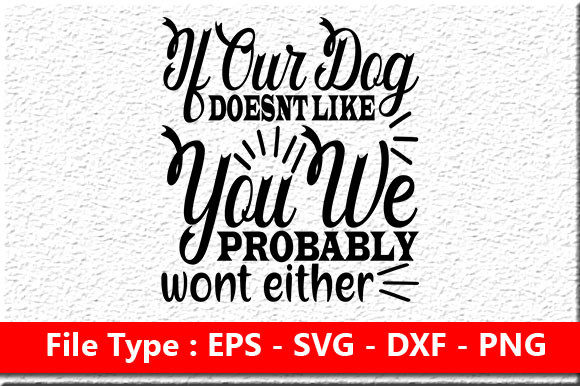
The moment I loaded the SVG into my digitizing software, the layout clicked: centered dog silhouette (friendly but no-nonsense), clean sans-serif text stacked beneath, tight kerning, balanced negative space. No floating elements. No awkward spacing between “Doesn’t” and “Like.” This isn’t a rushed clipart export—it’s built for clarity at 3–4 inches wide, the sweet spot for sweatshirt chest logos, apron pockets, or pillow covers. The dog shape reads instantly—even in monochrome mockups—and the phrase carries weight without shouting. That matters when you’re stitching for a handmade shop where tone is part of the brand.
Where It Shines: Real Projects, Real Customers
Last week, I used Dog Svg Design, if Our Dog Doesn’t Like You to embroider a set of linen tea towels for a local pet-friendly café. We paired it with soft sage thread on natural fabric—no fill stitch overload, just crisp satin outlines and subtle shadow accents in the dog’s ear and tail. Customers loved it. Not just because it’s cute, but because it felt *authentic*. That’s the quiet strength of this design: it supports storytelling. A small business owner selling personalized dog bandanas? This fits perfectly above a paw-print border. An Etsy seller launching holiday-themed kitchen linens? It adds warmth and humor without sacrificing polish.
I also tested it on a lightweight cotton baby romper—tiny hoop, light stabilizer, low-density fill. The text stayed legible down to 2.5 inches wide, and the dog’s silhouette held its shape even on slightly stretchy knit. For sweatshirt embroidery, I bumped up the underlay and added medium tear-away stabilizer—no puckering, no distortion. It’s versatile, yes—but only when treated like a thoughtful embroidery file, not a plug-and-play graphic.
Where to Pause—and Why
This isn’t a one-size-fits-all machine embroidery design. On dark fabrics, avoid ultra-thin fonts in the phrase unless you add a subtle white underlay—those tiny crossbars in “t” and “e” can vanish without contrast. On textured canvas or heavy denim, simplify the dog’s inner details before stitching; dense satin stitch in curved areas may snag or blur. And skip it entirely for curved surfaces like structured caps unless you re-digitize the curve—this version assumes flat, stable fabric.
Also: that “i” dot and apostrophe in “Doesn’t”? They’re delicate. On high-speed commercial machines or with low-quality thread, they’re the first to skip or fray. Test them early. Same goes for layered garments—think hoodies with thick fleece backing. You’ll need cutaway stabilizer and possibly reduced stitch density to keep the text crisp and breathable.
What It Adds to Your Finished Product
Dog Svg Design, if Our Dog Doesn’t Like You doesn’t just decorate—it positions. When stitched cleanly on a handmade tote bag or embroidered patch, it signals confidence, playfulness, and niche awareness. Buyers recognize it as intentional craftsmanship—not generic clipart. That builds trust. For Etsy sellers, that means higher perceived value and better photo mockups. For craft fair vendors, it sparks conversation and repeat tags on social. Even in printable mockups for digital product previews, the balanced proportions and clear hierarchy make it stand out in a crowded Graphics category.
Designer Notes You’ll Actually Use
- Always test on scrap fabric first—especially with textured or dark materials. See how the dog’s ear detail reads and whether the phrase stays cohesive at your target size.
- Check thread color contrast before stitching 20 units. Light gray on heather charcoal? Beautiful. Light gray on navy? Nearly invisible without underlay.
- Review stitch density. This design leans minimal—great for breathable apparel—but if you’re adding it to a quilted blanket or layered nursery decor, consider reinforcing key outlines with a second run of running stitch.
- Confirm hoop size compatibility. At full width, it fits comfortably in a 4×4 hoop—but if you plan to scale down for baby embroidery or scale up for a jacket back, verify scaling limits in your software.
- Inspect small details in both black-and-white and color mockups. Does the dog’s nose read? Does “Li” look distinct from “I”? Clarity is non-negotiable in custom apparel.
- Use proper stabilizer—light cutaway for knits, medium tear-away for woven cotton, heavy cutaway for towels or blankets.
- Verify licensing before selling finished items or bundling the files. Since the ZIP includes EPS, SVG, PNG, and DXF formats, confirm whether commercial use is permitted for your craft business or Etsy listings.
This isn’t just another Crafts download. Dog Svg Design, if Our Dog Doesn’t Like You is a quietly smart embroidery file—one that works as hard as you do. It fits naturally into personalized gifts, small shop merchandise, and professional embroidery projects because it respects the craft: no over-engineered fills, no visual noise, just clean intent and unmistakable character. Whether you’re stitching for joy or for profit, it earns its place in your design assets—not as filler, but as focus.