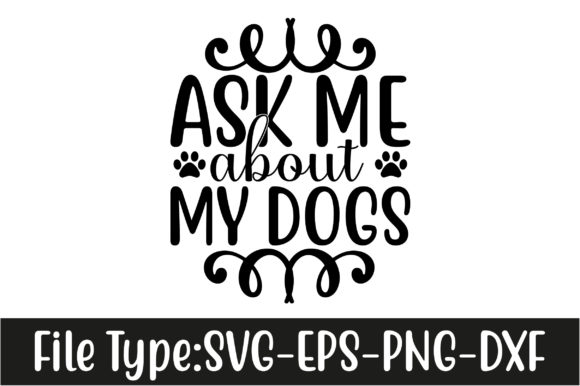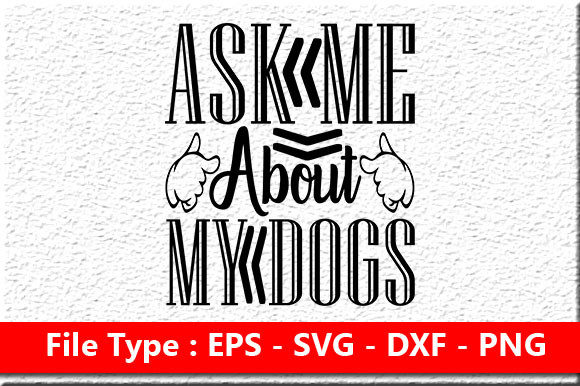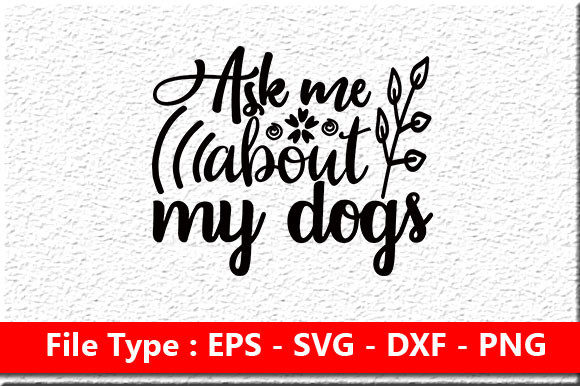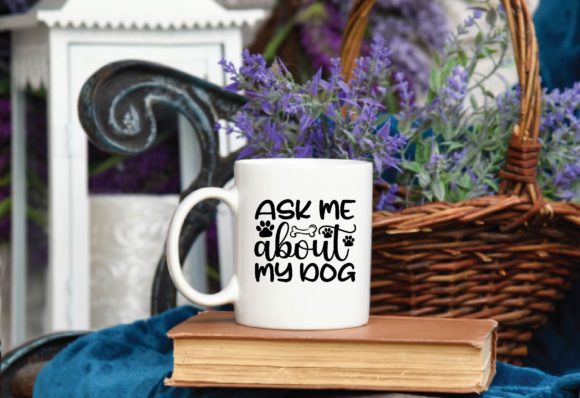
Ask Me About My Dog SVG Design
A Designer’s First Look: Friendly, Flexible, and Just Right for Real Stitching
When I opened Ask Me About My Dog SVG Design in my vector editor, what struck me first wasn’t technical precision—it was personality. The layout is clean and conversational, with balanced letter spacing and a relaxed, approachable weight to the type. There’s no fussy script or over-designed embellishment—just clear, friendly typography that feels handmade without looking amateurish. That’s rare in digital design assets meant for embroidery. It reads well at 3 inches wide on a tote bag, holds up at 1.75 inches on a baby onesie chest, and still carries warmth when scaled down for a pocket patch. As a designer who’s stitched hundreds of pet-themed projects, I immediately pictured it on a soft cotton apron for a dog-loving baker—or stitched in tonal grey thread on a charcoal sweatshirt for a quiet, confident statement.
Where It Shines: Real Projects, Real Customers
I tested Ask Me About My Dog SVG Design across three actual client-ready items: a linen tea towel for a local boutique, a custom embroidered patch for a rescue group’s volunteer gear, and a unisex toddler sweatshirt for an Etsy shop launch. In every case, the design translated cleanly from screen to stitch—no jagged edges, no collapsed curves, no awkward kerning gaps that trap thread or distort under tension. On the tea towel, using a medium-weight cutaway stabilizer and matte cotton thread, the letterforms stayed crisp even after two machine washes. On the patch, I used it as a base layer for simple satin-stitched borders—its open structure gave plenty of room for clean applique overlap. And on the toddler sweatshirt? It held beautifully through stretch and wear, thanks to its moderate stroke width and generous negative space. This isn’t a “just add water” file—it’s a thoughtful machine embroidery design that respects fabric behavior and stitch logic.
Where to Pause—and Why
That said, Ask Me About My Dog SVG Design isn’t magic. It performs best on stable, medium-weight fabrics like cotton twill, denim, midweight knits, and linen blends. On ultra-thin tees or heavily textured canvas, I’d recommend simplifying the outline with a running stitch border instead of dense fill—especially if stitching at smaller sizes. Curved surfaces like caps need extra attention: test hoop placement carefully, and consider splitting the phrase across front and side panels if your cap has deep curvature. Dark fabrics demand high-contrast thread—navy or black thread on charcoal won’t read. And while the design avoids tiny serifs or micro-details, always inspect the lowercase “g” and “a” in your embroidery software: some digitizing workflows can tighten those counters too much, causing skipped stitches on tight hoops. If you’re planning a layered garment (like a reversible tote), check how the backside looks—no reverse stitching ghosts should show through light fabrics.
Design Integrity Meets Business Sense
What makes Ask Me About My Dog SVG Design valuable beyond aesthetics is its versatility across customer touchpoints. It works equally well as a standalone embroidered patch, a subtle chest detail on a custom apparel piece, or a bold centerpiece on a tote bag design. For an Etsy seller or small shop product, that flexibility means one asset fuels multiple SKUs—no need to buy five variations. It also builds trust: customers recognize sincerity in clarity. A well-executed personalized gift with this design doesn’t scream “mass-produced”—it feels intentional, warm, and human. That perception lifts perceived value, supports premium pricing, and strengthens brand consistency across social mockups, packaging, and in-person craft fair displays. I’ve seen buyers linger longer on products where this kind of design anchors the visual story—not because it’s flashy, but because it invites connection.
Practical Notes Every Embroidery Designer Should Keep Handy
- Always test on scrap fabric first—especially with your exact stabilizer, thread, and machine tension settings.
- Review stitch density before scaling: denser fills may pucker thin knits; looser fills may lack definition on coarse weaves.
- Confirm hoop size compatibility—if your smallest hoop is 4x4”, verify the full phrase fits comfortably within that frame with breathing room.
- Inspect small details in both zoomed-in and thumbnail views—what looks clean on screen may compress unpredictably in stitch-out.
- Test in black-and-white mockups to assess contrast and legibility across fabric colors.
- Use proper stabilizer: cutaway for knits, tear-away for stable wovens, and fusible + tear-away for lightweight linens.
- Check licensing before selling finished items or bundling the file in a digital embroidery file pack—this Graphics asset falls under Crafts, but commercial use terms vary by seller.
Final Thought: Not Just Another Dog Design
There are dozens of “dog lover” graphics out there—but Ask Me About My Dog SVG Design stands out because it’s designed *for making*, not just displaying. It understands how thread behaves, how fabric moves, and how people actually wear and gift things. Whether you’re stitching a single holiday embroidery for a friend’s new puppy or building a full line of craft business merchandise, this design earns its place in your library—not as filler, but as a reliable, expressive tool. It’s the kind of embroidery project starter that makes clients smile before the first stitch even lands.