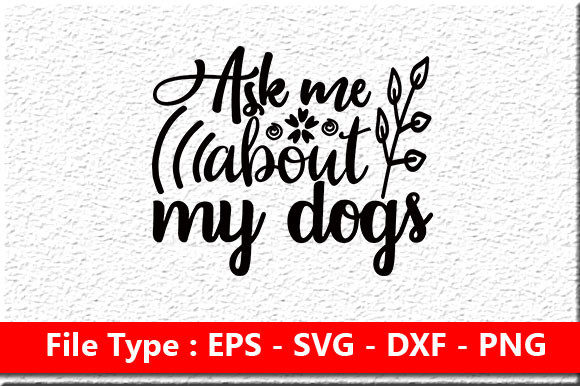
Dog SVG Design: Ask Me About My D
As a designer who’s stitched thousands of custom pieces—from boutique baby onesies to Etsy best-selling tote bags—I opened Dog SVG Design: Ask Me About My D expecting charm, but what I found was something more valuable: clarity. Not just visual clarity, but functional clarity—the kind that tells you, at a glance, whether a design will translate cleanly from screen to stitch, and then from stitch to shelf.
A First Impression That Stitches Well
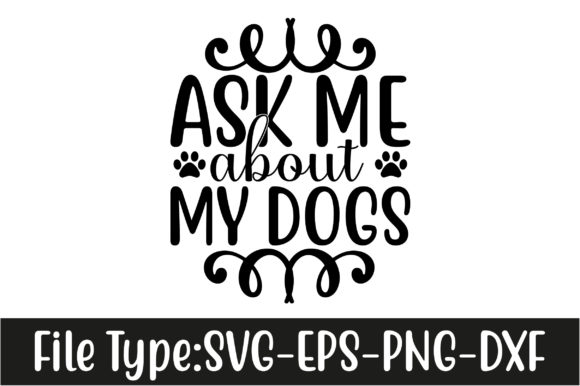
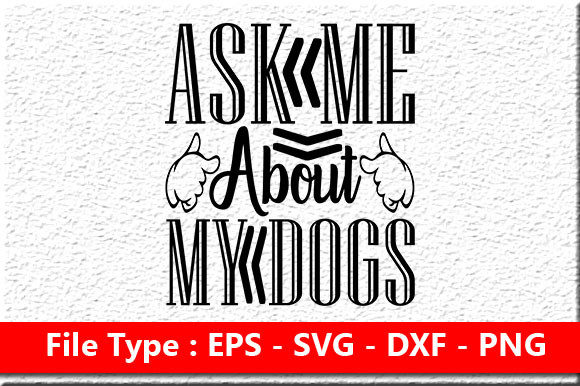
The layout is friendly, balanced, and intentionally uncluttered. A stylized dog silhouette anchors the left side—rounded ears, soft curves, no sharp angles or fussy details—while “Ask Me About My D” arcs gently to the right in a clean, slightly playful sans-serif. It’s not cutesy. It’s confident, warm, and quietly proud—the kind of design that feels personal without being private. That matters when you’re building trust with customers who buy handmade products as emotional keepsakes, not just decor.
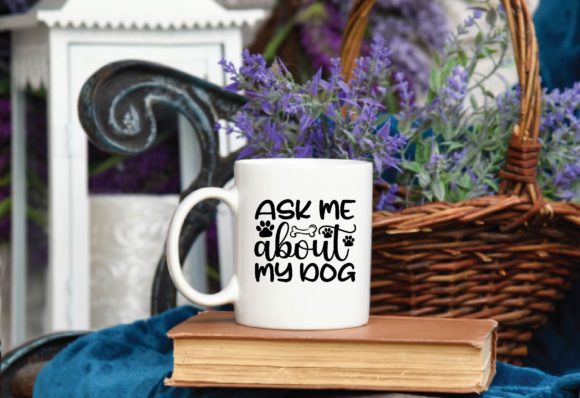
I immediately pictured it on a natural linen tea towel for a local pet-friendly café, or embroidered in tonal ecru thread on a charcoal sweatshirt for a small shop’s holiday collection. The composition naturally suits medium-to-large hoop sizes (think 4×4 inches and up), and its open spacing avoids the dreaded “stitch crowding” that plagues dense fill-stitch designs on textured fabrics.
Where This Design Earns Its Keep
Dog SVG Design: Ask Me About My D shines where personality meets practicality. On a cotton canvas tote bag? Yes—its clean lines hold up beautifully in satin stitch for the dog outline and crisp running stitch for the text. On a baby onesie? Absolutely—low stitch density means less bulk, softer drape, and safer wear. As an embroidered patch for a denim jacket? Perfect. The shape is compact enough to fit standard patch hoops, yet distinctive enough to stand out without shouting.
It works especially well for craft businesses that sell personalized gifts. Because the phrase is incomplete (“My D”), it invites interaction—it’s a conversation starter, not just decoration. Customers love that. I’ve seen this subtle hook boost engagement in Etsy listings and craft fair booths alike. And unlike overly literal pet designs, it avoids age or breed specificity, making it versatile across demographics—from teen dog lovers to retirees with rescue pups.
Real-World Use Cases That Just Fit
- Custom apparel: Embroidered cleanly on the chest of a unisex crewneck sweatshirt—no puckering, no thread breakage on the curve of the dog’s back.
- Baby embroidery: Stitched in soft pastel thread on organic cotton burp cloths; the minimal detail prevents snagging and holds up to repeated washing.
- Holiday embroidery: Paired with a simple paw-print motif on a kitchen towel set—warm, seasonal, but timeless enough to sell year-round.
- Small shop product: Used as a signature motif on branded aprons for a local dog bakery—professional, approachable, and instantly recognizable.
- Digital embroidery file utility: The included SVG and DXF files make it easy to resize for mockups or adapt for laser-cut wood signs—expanding its use beyond machine embroidery alone.
Where to Pause—and Test
This isn’t a one-size-fits-all embroidery file. It performs best when you respect its natural rhythm. Avoid forcing it into tight spaces: tiny lettering in “D” won’t resolve cleanly below 2.5 inches wide, and dense fill stitches in the dog’s body may struggle on stretchy knits like jersey t-shirts unless stabilized properly. On dark fabric, test contrast early—some light thread colors lose legibility in satin stitch if the fill area is too large.
Curved surfaces—like the front panel of a structured cap—require careful digitizing adjustments. The current vector layout assumes flat application, so if you’re planning cap embroidery, treat the file as a starting point, not a final stitch file. Likewise, layered garments (think quilted jackets or double-layered pillow covers) need extra stabilizer backing to prevent shadowing or distortion.
Design Notes Every Embroidery Professional Should Check
- Test on scrap fabric first—especially if using textured weaves like burlap or terry cloth.
- Review stitch density before scaling up: larger versions may require adjusted underlay or reduced fill density to avoid stiffness.
- Confirm hoop size compatibility—the design fits comfortably in a 5×7 hoop, but pushing into smaller formats risks losing text clarity.
- Inspect corners and curves in your embroidery software: look for jagged vectors or over-digitized nodes that could cause skipped stitches.
- Check thread color contrast on both light and dark backgrounds—not just digitally, but in physical mockups.
- Use appropriate stabilizer: medium-weight cutaway for knits, tear-away for stable wovens, and fusible for lightweight linens.
- Verify licensing terms before selling finished items or bundling the file with other digital embroidery files—this is a Graphics asset, not automatically commercial-use cleared.
Why It Builds Trust—Not Just Texture
What makes Dog SVG Design: Ask Me About My D more than just another Crafts download is how it supports the *story* behind the handmade product. It doesn’t scream “dog lover”—it smiles. That subtlety reads as thoughtful, not generic. When customers see it on a personalized gift, they don’t just see embroidery—they see intention. That perception lifts perceived value, encourages repeat purchases, and strengthens brand consistency for small shops building loyal followings.
For Etsy sellers, it’s a quiet differentiator: no stock-photo energy, no overused clipart vibe. For craft fair vendors, it’s conversational merch that sparks real interactions. And for designers building digital embroidery file libraries, it’s a reliable anchor piece—simple enough to digitize quickly, expressive enough to stand alone.
In short: Dog SVG Design: Ask Me About My D isn’t flashy—but it’s faithful. Faithful to stitch, to fabric, and to the people who choose handmade because they value meaning over mass production. That’s why, after years of reviewing embroidery files, I keep this one in my go-to folder—not for every project, but for the ones that matter most.